The Written Word: Engaged(ing) rather than “to-be-married”

cat looking at fish

Great writing is immediately recognizable. Well-written content is like the “no explanation needed” photo shown above – the audience is immediately drawn in.

I – like any other writer – am happy to acknowledge writers who come up with great eye-catching phrases to draw in an audience:

My cat Snoopy (shown above) rightfully earned his full name: Snoopy Grumpy Monkey Monster. When I would hold him, he would purr as I would sing his own personal jingle to him: “Snoopy Grumpy Monkey Monster, Monster Boy. Snoopy is one Monster Boy.” He knew that this was his own personal song. Humans smile at the rhymed humor.

When people go looking for a writing consultant (such as myself), they may or may not have the words to articulate what they’d like to receive for a final product, though they’ll “know it” if they receive good written content. Quality writing has an artful blend of the following:

  • A mix of great phraseology (such as that shown above)
  • An ability to explain ideas cogently on paper (i.e. Clarity from “The 4 C’s” of journalism combined with an ability to bring forth “interesting readability” (engaging, insightful)
  • Good writing mechanics – the ability to be concise, etc.
  • An understanding of how much descriptive color and explanatory context to bring to the page to make ideas relevant to the reader (i.e., the reader would take less interest in the phrase “Snoopy Grumpy Monkey Monster” without having first seen a photo of a mischievous, good-looking cat “in action” to associate with the entertaining nick name)……

Burkhardt Writing Services would like to hear from you about your wordsmith needs. We just might be the writing consultant you are seeking.

~

Kim Burkhardt provides writing services – including ghostwriting, “corporate storytelling,” articles, how-to manuals, and editing – at Burkhardt Writing Services. Contact us about your wordsmithing and storytelling needs.

Writer reflection: could you write this photo?

Seattle skyline at night
Seattle Skyline

Seattle has joined the ranks of high-traffic-congestion cities.

When I need to drive anywhere, I look for opportunities to go at times when traffic is likely to be less congested. Last fall, for example, I was commuting to a job that had some flexibility in terms of start times. So, I would leave home at about 6:45 am.

Leaving home at 6:45 am shares something in common with being a writer. Opportunities.

Nearly every situation has some kind of opportunity embedded within it. It’s up to us to find it.

In the case of an early morning commute – before daylight – I spotted the opportunity to take a night-time photo of the Seattle skyline – complete with the iconic Space Needle and Lake Union. People like this photo.

As writers, our writing is likewise well received when we bring appreciable observations to the written page. It is up to us to make insightful observations and find interesting ways to bring them to print.

I was able to bring viewers the photo above by moving beyond the snap-and-shoot mechanics of photography. I had learned what constitutes a good photo – identifying a visually interesting scene and learning how to frame it well with a camera’s lens. I did back flips – of sorts – to find a place to safely pull over to take this photo.

Writing – like photography – “comes to light” when we move beyond basic writing mechanics: “I saw downtown Seattle at night. You would find the scene beautiful if you saw it.” Rather, “Downtown Seattle’s skyline quite literally lights up at night. Anyone who finds themself driving southbound on I-5 at night takes in the collective beauty of hilltop business district towers and shoreline buildings left alight to ward off would-be intruders. Those who have read Katherine Kurtz’s novel St. Patrick’s Gargoyle can – when seeing downtown Seattle’s night time skyline – imagine a monthly gargoyle conclave in Seattle to protect the city equivalent to Dublin’s gargoyle conclaves. Quite striking.” (A personal aside that I would happily work in to a longer article with an opportunity for individual reflection: Dublin is located in the Emerald Isle, while Seattle is the Emerald City…. I had a memorable flight in 2018 in which I watched the sun rise in Dublin and set in Seattle….).

Being a writer is clearly more than mechanically stringing together words. Writing involves observation about the world around us, an understanding of what people want or need to think about, and an ability to bring all of that to the page in readable language. For each type of written publication, there are also genre-specific writing considerations – creativity is needed when writing novels, an ability to be factual and insightful is needed for business publications, an ability to be factually descriptive is necessary when writing how-to manuals, etc.

Kim Burkhardt provides writing services – including ghostwriting, “corporate storytelling,” articles, how-to manuals, and editing – at Burkhardt Writing Services. Contact us about your wordsmithing and storytelling needs.
In the news: growing need for “corporate storytellers”

In our world’s changing media, social media, and overall communications landscape, companies are seeking effective ways to communicate meaningfully with their customers and communities. More and more, companies are hiring “corporate storytellers” – those of us who present companies via “the written word” on all the mediums that are part of “corporate branding.”

Check out the Wall Street Journal’s December 12, 2025 article on the growing need for “corporate storytellers” (by the way, WSJ came up with a great “corporate campfire” image for the story!).

Kim Burkhardt provides writing services – including “corporate storytelling” – at Burkhardt Writing Services. Contact us about your wordsmithing and storytelling needs.
Author reflection: writing ancestor’s biographies

Harriet Susannah Ellis was born on February 5, 1863 in Riverstown, County Sligo, Ireland.

Her oldest surviving son – my Irish-born great-grandfather – lived until I was thirteen. I have fond memories of him – including the time when he fell asleep at my birthday party (I was turning eight) and the party stopped so that the children in attendance could watch him snore with an Irish brogue. When I was three or four, he carried me around his yard in a wheelbarrow – great fun for a young child. I still buy deep purple pansies because he had deep purple pansies in his yard when I was a child.

When I was growing up, we heard stories about my great-grandfather’s childhood in rural Ireland (County Wicklow). We heard about his blind father (I, in turn, was raised by my blind mother). We heard about his paternal uncles and paternal grandfather who were doctors (in 2018, I visited Trinity College Dublin where they did their medical degrees in the 1800’s. It gave me chills to realize they had walked the same hallways when I walked through the campus’s historical library).

Yet, I realized in 2013 that I knew nothing about my great-grandfather’s mother. Surely she had existed, confirmed by the fact that she had children whose lives I knew about. I had never heard any mention of her. I didn’t even know her name.

Because we live today in a digital age, I was able to go online in search of information about my great-grandfather’s mother. Within a fairly short time, online genealogical research led me to her name. Harriet Ellis. Specifically, Harriet Susannah Ellis. Beyond that, I didn’t find much. In January, 2014, I decided to do a Google search of her name. Fortunately, I found a post on a genealogy website written by her youngest brother’s grandson. Great! I contacted him.

When I contacted Harriet’s youngest brother’s grandson, it turned out that he lives in a Dublin suburb. Much to my happy surprise, he had been driving around Ireland for twenty years looking up genealogical records of our ancestors (I am fortunate – not every budding genealogist finds such a relative!). He was happy to share the information he had been meticulously collecting.

Fast forward. I began organizing data about my Irish ancestors into book form. I contacted other descendants – collected their info about recent generations. I collected old family photographs, old family letters that had been saved, family stories that had been passed down. All of this became our family’s genealogy book (see my previous post about my Irish genealogy book).

By the time we printed our genealogy book and had the first family reunion since 1980, I had learned much about Harriet’s life. She was born in the same Irish county as William Butler Yeats’ family at about the same time (did she ever cross paths with him?); the county where she was born was also where Bram Stoker’s mother was born (Bram Stoker seems to have gotten several ideas for his Dracula novel from stories his mother told about County Sligo’s cholera epidemic in the 1930’s). Harriet had thirteen children, ten of whom lived. She filled out the birth certificate and the death certificate for her first-born child who died two hours after an unattended home birth. Her father was a school master who moved from job to job, taking his wife and children all over Ireland via Ireland’s newly-emerging train system. She eloped. As the daughter and sibling of school masters, she valued education for her children. She emigrated in the 1900’s. She died the same day that the Soviets invaded Poland. I suggested to my Dublin-area distant cousin that we continue on, writing Harriet’s biography. We did.

Writing Harriet’s biography was made possible as a result of many years of genealogical research. A point I want to stress is that books are often the end-result of much learning and effort. The book was also a labor of love. Writing a book is an effort that requires learning the mechanics of writing (we learn at least some if this in school), learning what’s involved in making information presentable and interesting, and putting in the time to write. Having an editor go through one’s written material helps identify needed improvements before publishing a book (identifying spelling and grammar that need correction, spotting incomplete presentations of information that are overlooked when knee-deep in the writing process, noting shifts in perspective or narrative style that need correction, etc.).

I am also pleased to have contributed to bringing stories of every day historical women’s lives to print. After we published Harriet’s biography, I came up a research network that studies “Perceptions of pregnancy.” I wrote an article for their website about Harriet’s experience of childbearing: An Experience of Home Births in Rural Ireland: 1883 – 1903.

I hope you will take an interest in Harriet’s biography.

Kim Burkhardt provides writing services at Burkhardt Writing Services. Contact us about your wordsmithing needs.

Writer’s Skill: Incorporating perspective

Mountains, clouds
Mountains with low-lying clouds

I currently live just over one hundred miles from where I grew up.

When I drive from south of Seattle to my hometown of Bellingham, Washington, my favorite part of the scenic drive is the commonly-occurring mountain-level clouds in Skagit and Whatcom Counties.

I recognize now that locals in Whatcom and Skagit counties likely take these clouds for granted.  I did while I was growing up.

Now that I live a two hour drive away (when traffic’s not bad!), I live just far enough away to not have these low-lying clouds be a daily (or near-daily) occurrence.  Thus, I now notice them as a locally distinct event when I go home.  They are visually engaging.

A good writer does the same thing when writing – noticing and/or developing perspective – and then using descriptive narrative – to incorporate that perspective into the written word.

When written text lacks perspective, the reader will notice the text only in observing that what they are reading is not worth reading.  They may not know that perspective is what’s missing, but they won’t want to continue reading.  It is incumbent upon the writer to identify perspective and incorporate it into the text.

Providing perspective – among a host of skills involved in understanding the world and one’s audience – is necessary for the writer who wants an audience.

Kim Burkhardt provides writing services at Burkhardt Writing Services. Contact us about your wordsmithing needs.

Bringing the written word to life

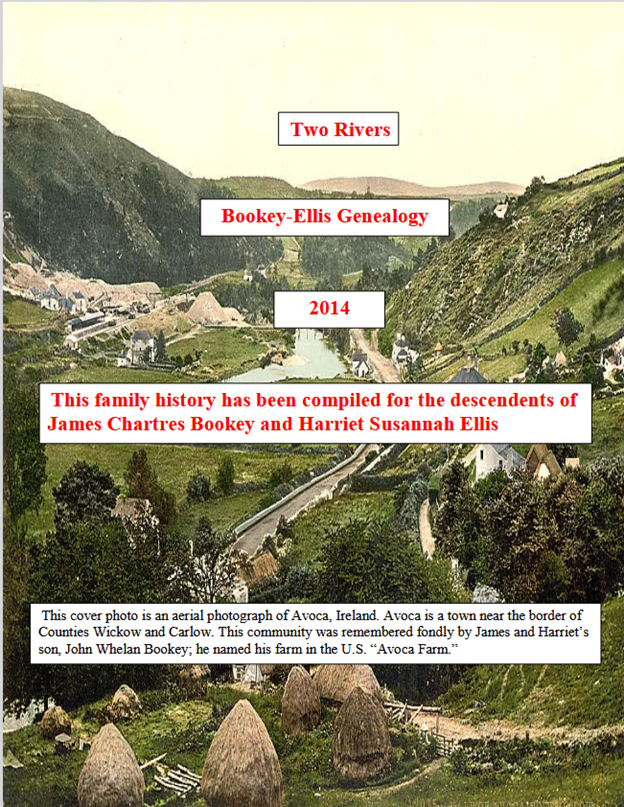
Book of Irish genealogy
Bookey-Ellis genealogy book

In this writer’s blog, I discuss what it means to write. I give examples of what it means to bring the written word to life. Making words meaningful is done in varying ways in different contexts.

Today, I will give the example of bringing words to life in the context of genealogy.

I co-wrote the genealogy book for my Irish-side relatives (2014).

When I say that I co-wrote the book, I mean exactly that. I took the lead on writing the book.

Much of the historical genealogical research was done by a distant cousin in Dun Laoghaire (“Dun Leerie”, a Dublin suburb). He did twenty years of on-the-ground records searching, verifying historically-accurate family data going back to the 1700’s. I followed up with current relatives to collect current family data. I then organized the data chronologically, by relative. There was a tremendous amount of work involved in this research – our family is immensely grateful to my cousin for the years of effort he put into uncovering our family history. This data collection made it possible for us to know who our ancestors were, where they lived, how many kids they had, often finding out what they did for a living.

In this blog, I write about writing. When we published our genealogy book (relatives asked that information in the book about living relatives not be shared publicly for privacy), a friend of the family saw the book on a coffee table and asked for my contact info. When the family friend contacted me, they expressed appreciation for the book because it is different from other genealogy books they had seen. Too often, they observed, genealogy books only – or strictly – list names, dates, dates of birth, locations where people lived and died, and other historical data about relatives. Not so with the genealogy book that I co-wrote. In this genealogy book, I took the lead in including information that brought our ancestor’s lives “to life.” For example, we included:

  • Old family photographs of previous generations
  • Old family letters that had been handed down over the generations
  • Photos of the ships that ancestors rode when they emigrated
  • Photos of the rural schools attended by our Irish ancestors
  • A photo of the baptismal font where my great-great grandmother was baptised in the 1860’s
  • A photo of the door of the hotel where my great-great grandparents stayed when they eloped (the door is still there!)
  • Family stories that had been handed down. At the turn of the 1900’s, for example, my great-great grandmother discovered that her children were skipping school when the schoolmaster contacted her to ask if she was planning to send her school again; her children said years later that when their mother discovered they were skipping school, “she brought out the switch.” Also, the family home had no plumbing at the turn of the century – the children washed dishes in the stream that ran through the property (I’ve been there and saw the stream. The stream was just a trickle in the summer. Imagine washing dishes in a stream in the winter….). At the same time, a traveling seamstress would come through every six months and stay with the family for a week while she made the family’s clothing…….
  • Historical explanations such as what it meant for my Irish ancestor’s small rural village to be “a market town” that had market once a week.

Writing, as indicated above, informs the reader of the context surrounding data – bringing the written word to life.

Kim Burkhardt provides writing services at Burkhardt Writing Services. Contact us about your wordsmithing needs.

Writing Style: The Gentleman from Finland

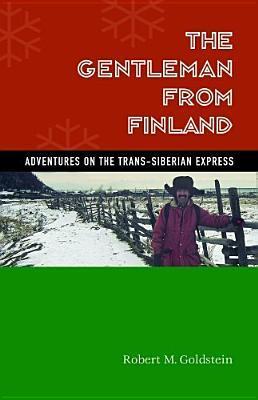
Book: The Gentleman from Finland
Book: Gentleman from Finland

There are various writing styles – a number of them having useful applications in specific writing contexts.

The book shown above – The Gentleman from Finland: Adventures on the Trans Siberian Express by Robert M. Goldstein – is among my favorite books read in recent memory. So much so that I’ve been buying copies to give as gifts to friends.

When I read the book, I laughed so hard that I cried.

What happens for a book to get readers laughing until they cry?

In the case of biography, a book must have a funny story to tell in order to get readers laughing until they cry. Yet, that’s only the groundwork. In the case of this book, the author was willing to be brutally honest and open in telling his compelling tale in a challenging situation – an American tourist experiencing harrowing experience along the Trans Siberian Express. The author did more than just relay dates and factual aspects about his journey. He opened up, bringing to life on paper the experientially human aspects of what made the trip worth laughing-until-you-cry. Goldstein was willing to share the aspects of the story that made the story emotionally-compelling.

The intimate self-disclosure within storytelling that made this autobiography great is very different writing than the writing that makes a biology textbook or an IKEA how-to-construct manual great.

Kim Burkhardt provides writing services at Burkhardt Writing Services. Contact us about your wordsmithing needs.