Writer reflection: could you write this photo?

Seattle skyline at night
Seattle Skyline

Seattle has joined the ranks of high-traffic-congestion cities.

When I need to drive anywhere, I look for opportunities to go at times when traffic is likely to be less congested. Last fall, for example, I was commuting to a job that had some flexibility in terms of start times. So, I would leave home at about 6:45 am.

Leaving home at 6:45 am shares something in common with being a writer. Opportunities.

Nearly every situation has some kind of opportunity embedded within it. It’s up to us to find it.

In the case of an early morning commute – before daylight – I spotted the opportunity to take a night-time photo of the Seattle skyline – complete with the iconic Space Needle and Lake Union. People like this photo.

As writers, our writing is likewise well received when we bring appreciable observations to the written page. It is up to us to make insightful observations and find interesting ways to bring them to print.

I was able to bring viewers the photo above by moving beyond the snap-and-shoot mechanics of photography. I had learned what constitutes a good photo – identifying a visually interesting scene and learning how to frame it well with a camera’s lens. I did back flips – of sorts – to find a place to safely pull over to take this photo.

Writing – like photography – “comes to light” when we move beyond basic writing mechanics: “I saw downtown Seattle at night. You would find the scene beautiful if you saw it.” Rather, “Downtown Seattle’s skyline quite literally lights up at night. Anyone who finds themself driving southbound on I-5 at night takes in the collective beauty of hilltop business district towers and shoreline buildings left alight to ward off would-be intruders. Those who have read Katherine Kurtz’s novel St. Patrick’s Gargoyle can – when seeing downtown Seattle’s night time skyline – imagine a monthly gargoyle conclave in Seattle to protect the city equivalent to Dublin’s gargoyle conclaves. Quite striking.” (A personal aside that I would happily work in to a longer article with an opportunity for individual reflection: Dublin is located in the Emerald Isle, while Seattle is the Emerald City…. I had a memorable flight in 2018 in which I watched the sun rise in Dublin and set in Seattle….).

Being a writer is clearly more than mechanically stringing together words. Writing involves observation about the world around us, an understanding of what people want or need to think about, and an ability to bring all of that to the page in readable language. For each type of written publication, there are also genre-specific writing considerations – creativity is needed when writing novels, an ability to be factual and insightful is needed for business publications, an ability to be factually descriptive is necessary when writing how-to manuals, etc.

Kim Burkhardt provides writing services – including ghostwriting, “corporate storytelling,” articles, how-to manuals, and editing – at Burkhardt Writing Services. Contact us about your wordsmithing and storytelling needs.

Author reflection: writing ancestor’s biographies

Harriet Susannah Ellis was born on February 5, 1863 in Riverstown, County Sligo, Ireland.

Her oldest surviving son – my Irish-born great-grandfather – lived until I was thirteen. I have fond memories of him – including the time when he fell asleep at my birthday party (I was turning eight) and the party stopped so that the children in attendance could watch him snore with an Irish brogue. When I was three or four, he carried me around his yard in a wheelbarrow – great fun for a young child. I still buy deep purple pansies because he had deep purple pansies in his yard when I was a child.

When I was growing up, we heard stories about my great-grandfather’s childhood in rural Ireland (County Wicklow). We heard about his blind father (I, in turn, was raised by my blind mother). We heard about his paternal uncles and paternal grandfather who were doctors (in 2018, I visited Trinity College Dublin where they did their medical degrees in the 1800’s. It gave me chills to realize they had walked the same hallways when I walked through the campus’s historical library).

Yet, I realized in 2013 that I knew nothing about my great-grandfather’s mother. Surely she had existed, confirmed by the fact that she had children whose lives I knew about. I had never heard any mention of her. I didn’t even know her name.

Because we live today in a digital age, I was able to go online in search of information about my great-grandfather’s mother. Within a fairly short time, online genealogical research led me to her name. Harriet Ellis. Specifically, Harriet Susannah Ellis. Beyond that, I didn’t find much. In January, 2014, I decided to do a Google search of her name. Fortunately, I found a post on a genealogy website written by her youngest brother’s grandson. Great! I contacted him.

When I contacted Harriet’s youngest brother’s grandson, it turned out that he lives in a Dublin suburb. Much to my happy surprise, he had been driving around Ireland for twenty years looking up genealogical records of our ancestors (I am fortunate – not every budding genealogist finds such a relative!). He was happy to share the information he had been meticulously collecting.

Fast forward. I began organizing data about my Irish ancestors into book form. I contacted other descendants – collected their info about recent generations. I collected old family photographs, old family letters that had been saved, family stories that had been passed down. All of this became our family’s genealogy book (see my previous post about my Irish genealogy book).

By the time we printed our genealogy book and had the first family reunion since 1980, I had learned much about Harriet’s life. She was born in the same Irish county as William Butler Yeats’ family at about the same time (did she ever cross paths with him?); the county where she was born was also where Bram Stoker’s mother was born (Bram Stoker seems to have gotten several ideas for his Dracula novel from stories his mother told about County Sligo’s cholera epidemic in the 1930’s). Harriet had thirteen children, ten of whom lived. She filled out the birth certificate and the death certificate for her first-born child who died two hours after an unattended home birth. Her father was a school master who moved from job to job, taking his wife and children all over Ireland via Ireland’s newly-emerging train system. She eloped. As the daughter and sibling of school masters, she valued education for her children. She emigrated in the 1900’s. She died the same day that the Soviets invaded Poland. I suggested to my Dublin-area distant cousin that we continue on, writing Harriet’s biography. We did.

Writing Harriet’s biography was made possible as a result of many years of genealogical research. A point I want to stress is that books are often the end-result of much learning and effort. The book was also a labor of love. Writing a book is an effort that requires learning the mechanics of writing (we learn at least some if this in school), learning what’s involved in making information presentable and interesting, and putting in the time to write. Having an editor go through one’s written material helps identify needed improvements before publishing a book (identifying spelling and grammar that need correction, spotting incomplete presentations of information that are overlooked when knee-deep in the writing process, noting shifts in perspective or narrative style that need correction, etc.).

I am also pleased to have contributed to bringing stories of every day historical women’s lives to print. After we published Harriet’s biography, I came up a research network that studies “Perceptions of pregnancy.” I wrote an article for their website about Harriet’s experience of childbearing: An Experience of Home Births in Rural Ireland: 1883 – 1903.

I hope you will take an interest in Harriet’s biography.

Kim Burkhardt provides writing services at Burkhardt Writing Services. Contact us about your wordsmithing needs.

Writer’s Challenge: Describe this photo

cat looking at fish
Cat, fish tank

A skilled writer will be able to conjure up the fullness of the image and all the connotations that come to mind (make a few sentences worth a thousand words….)

.

.

Scroll down…..

.

.

Writing tip:

  • Mentally identify what it is that makes this photo eye-catching.   When we look at a photo that captures our attention, it grabs our attention without us necessarily articulating an explanation of why the photo interests us – a good writer articulates these matters to create a mental response equivalent to our visual response to a photo.

.

.

Scroll down…..

.

.

Sample written description of this photo:

  • In the next moment, rather than seeing the face of one brown-eared, brown-legged, brown-tailed long-haired cat, we see the back of its’ white head as the seal-point Himalayan stares intensely at goldfish swimming furiously – likely in stark fear – in their ten gallon fish tank not much taller (or longer) than the very-focused feline…..

Kim Burkhardt provides writing services at Burkhardt Writing Services. Contact us about your wordsmithing needs.

Writer’s Skill: Incorporating perspective

Mountains, clouds
Mountains with low-lying clouds

I currently live just over one hundred miles from where I grew up.

When I drive from south of Seattle to my hometown of Bellingham, Washington, my favorite part of the scenic drive is the commonly-occurring mountain-level clouds in Skagit and Whatcom Counties.

I recognize now that locals in Whatcom and Skagit counties likely take these clouds for granted.  I did while I was growing up.

Now that I live a two hour drive away (when traffic’s not bad!), I live just far enough away to not have these low-lying clouds be a daily (or near-daily) occurrence.  Thus, I now notice them as a locally distinct event when I go home.  They are visually engaging.

A good writer does the same thing when writing – noticing and/or developing perspective – and then using descriptive narrative – to incorporate that perspective into the written word.

When written text lacks perspective, the reader will notice the text only in observing that what they are reading is not worth reading.  They may not know that perspective is what’s missing, but they won’t want to continue reading.  It is incumbent upon the writer to identify perspective and incorporate it into the text.

Providing perspective – among a host of skills involved in understanding the world and one’s audience – is necessary for the writer who wants an audience.

Kim Burkhardt provides writing services at Burkhardt Writing Services. Contact us about your wordsmithing needs.

Writing Style: Be Clear, Be You

leather bound book
Book with leather cover

The purpose of writing is to communicate.

Actually communicating via the written word requires more than factually stating information. I indicated in my previous post, for example, that Robert M. Goldstein’s biographical tale of riding the Trans Siberian Express succeeds at being a laugh-so-hard-you-cry narrative because he did more than state where he travelled and what he did. He was self-transparent, thereby humanizing the story, in describing his mishaps – discovering two days into his trip-of-a-lifetime train ride that he was on the wrong train and telling about his only pair of shoes getting stolen.

At times, the written word does – in fact – call for literal, straightforward facts-and-figures communication. A how-to-assemble document for a piece of furniture or a bicycle requires literal step-by-step instructions. A good communicator, though, recognizes when such step-by-step communication is appropriate – and brings to the communication an understanding of how to be straightforward. “You will need a hammer for this project” demonstrates a writer’s understanding of the human experience involved when crafting the assembly of a useful how-to manual – while also knowing what information not to include (no one cares if your cat sat with you while you crafted the how-to manual). Personal insertions of information might be relevant – on the other hand – when assembling a how-to-ride-the-Trans-Siberian-Express manual (“Here’s a tip I learned on how to avoid getting your only pair of shoes stolen”).

Writing to communicate with an audience isn’t about you. Except when it is about you (an autobiography, for example). Written communication is for the reader. Yet, the reader will be able to see you in the written communication. Does the writer know to tell me to have a screwdriver when assembling a bookshelf? Does the writer know when to insert personal anecdotes to make a story human and therefore compelling? A reader of a professional journal will evaluate the writer of an article – does the writer know industry standards well enough to know the appropriate communication style(s) for that industry and that publication? Does the writer of a novel have enough experience with people to know the communication tools that make a narrative interesting?

I am currently reading a book by an author who narrates U2’s (the Irish rock band) use of visual imagery at their rock concerts. The author observes in the book that when there’s upward/downward tension co-occurring in a song, one band member will walk up stairs while another band member walks down stairs. I had never noticed that in watching U2 concerts. I appreciate author Kevin Ott – and have an increased appreciation for U2 – as a result of Ott’s insightful and descriptive narrative in Ott’s Shadowlands.

Writing – when effective – is clear, descriptive, and informative. When done well, writing also tells us about the writer. Of course, the best writing renders readers so absorbed in content that we don’t notice the medium…..

Kim Burkhardt provides writing services at Burkhardt Writing Services. Contact us about your wordsmithing needs.

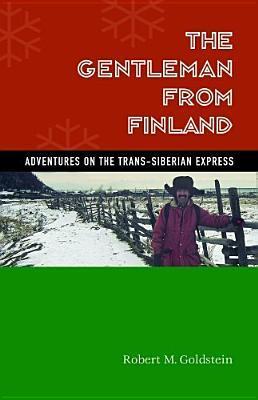
Writing Style: The Gentleman from Finland

Book: The Gentleman from Finland
Book: Gentleman from Finland

There are various writing styles – a number of them having useful applications in specific writing contexts.

The book shown above – The Gentleman from Finland: Adventures on the Trans Siberian Express by Robert M. Goldstein – is among my favorite books read in recent memory. So much so that I’ve been buying copies to give as gifts to friends.

When I read the book, I laughed so hard that I cried.

What happens for a book to get readers laughing until they cry?

In the case of biography, a book must have a funny story to tell in order to get readers laughing until they cry. Yet, that’s only the groundwork. In the case of this book, the author was willing to be brutally honest and open in telling his compelling tale in a challenging situation – an American tourist experiencing harrowing experience along the Trans Siberian Express. The author did more than just relay dates and factual aspects about his journey. He opened up, bringing to life on paper the experientially human aspects of what made the trip worth laughing-until-you-cry. Goldstein was willing to share the aspects of the story that made the story emotionally-compelling.

The intimate self-disclosure within storytelling that made this autobiography great is very different writing than the writing that makes a biology textbook or an IKEA how-to-construct manual great.

Kim Burkhardt provides writing services at Burkhardt Writing Services. Contact us about your wordsmithing needs.