Trade Talk: New Indie Book Bestseller Lists

Bookshelf

Publisher’s Weekly has announced that “The Independent Publishers Caucus, a collective of 117 small and independent publishers, has announced the launch of a new weekly bestseller list in partnership with the American Booksellers Association, creating what organizers say is the first national ranking focused exclusively on independent press titles sold at independent bookstores…Dubbed the Independent Press Top 40” (find the rest of PW’s article here).

Regularly publicizing a ranking of independent press titles (“indie books”) sold at independent bookstores is a great idea. This promotes small businesses. It provides attention for authors whose voices might not otherwise be getting large-scale public notice – making it more possible for readers to discover new-to-them authors.

A couple of examples demonstrate the value of this “Independent Press Top 40” list.

  • I personally buy several books per year from several niche publishers in a specific industry whose books (topics) I value. I happen to be “in the know” about the particular market for which these book publishers provide titles, so I know to follow these publishers. With that said, I know people who would likely want to read the same types of books I’m reading, but who aren’t likely familiar with the publishers whose websites I visit regularly. Any mechanism that supports “get out the word” for such indie publishers is a win-win-win-win for publishers, authors, readers, and the sustainability of “shop local” business practices.
  • My hometown (Bellingham, Washington) – like many communities – has a beloved local bookstore. Village Books and Paper Dreams is a valued hub in the community. This new weekly national “Independent Press Top 40” ranking is another way to keep such small bookstores in the public eye – thereby supporting great businesses.

While we’re talking indie booksellers, I’m happy to plug my two favorite online booksellers:

  • Hamilton Books. Based in Connecticut, Hamilton Books is based in Connecticut, USA and has been around since 1969. They specialize in selling discounted books to U.S. customers. I love Hamilton Books. They sell books via their website and a print magazine. I discovered them more than twenty years ago when they somehow got my name and mailing address; they sent me one of their magazines listing a sampling of their book inventory. It was actually their magazine that I fell in love with – their listing of quirky and off-the-wall titles of available books. I started buying from them for the purpose of staying on their mailing list (this is a sentence that every marketer wants to read!). Reading their lists of “off-the-wall titles” – such as “off the beaten track” historical books and books on political and religious conspiracy theories from “every end the political and religious spectrums” – literally became Friday night entertainment for me.
  • Thrift Books (their marketing angles: “gift more, spend less” and “read more, spend less”). This Washington State-based bookseller calls themself “the largest online independent used book seller. A friend told me about them last spring; I have already purchased enough books to achieve their highest reader/purchaser tier of “Literati Elite.” Their “Reading Rewards” program is simple yet fun – the more you buy, the more book-buying benefits you get….. Their membership tier program seems to be tied into our digital age approach to tapping dopamine receptors – our brains get a “dopamine high” every time we “like” or “achieve” something via a click-of-the-mouse….. Of course, book lovers like joining “Literati Elite” status……

I encourage you to click on this weekly Independent Press Top 40 and add to however you track websites that you visit regularly (add it to your browser faves, whatever). You just might find your next great read!

Kim Burkhardt provides writing services – including ghostwriting, “corporate storytelling,” articles, how-to manuals, and editing – at Burkhardt Writing Services. Contact us about your wordsmithing and storytelling needs.

The Written Word: Engaged(ing) rather than “to-be-married”

cat looking at fish

Great writing is immediately recognizable. Well-written content is like the “no explanation needed” photo shown above – the audience is immediately drawn in.

I – like any other writer – am happy to acknowledge writers who come up with great eye-catching phrases to draw in an audience:

My cat Snoopy (shown above) rightfully earned his full name: Snoopy Grumpy Monkey Monster. When I would hold him, he would purr as I would sing his own personal jingle to him: “Snoopy Grumpy Monkey Monster, Monster Boy. Snoopy is one Monster Boy.” He knew that this was his own personal song. Humans smile at the rhymed humor.

When people go looking for a writing consultant (such as myself), they may or may not have the words to articulate what they’d like to receive for a final product, though they’ll “know it” if they receive good written content. Quality writing has an artful blend of the following:

  • A mix of great phraseology (such as that shown above)
  • An ability to explain ideas cogently on paper (i.e. Clarity from “The 4 C’s” of journalism combined with an ability to bring forth “interesting readability” (engaging, insightful)
  • Good writing mechanics – the ability to be concise, etc.
  • An understanding of how much descriptive color and explanatory context to bring to the page to make ideas relevant to the reader (i.e., the reader would take less interest in the phrase “Snoopy Grumpy Monkey Monster” without having first seen a photo of a mischievous, good-looking cat “in action” to associate with the entertaining nick name)……

Burkhardt Writing Services would like to hear from you about your wordsmith needs. We just might be the writing consultant you are seeking.

~

Kim Burkhardt provides writing services – including ghostwriting, “corporate storytelling,” articles, how-to manuals, and editing – at Burkhardt Writing Services. Contact us about your wordsmithing and storytelling needs.

The written word: how we present ourselves matters

leather bound book
Book with leather cover

Why work with a contract writer-for-hire?

Most of us learn during high school or college that how we dress for a job interview can impact whether we get the job.  How we present ourselves matters. “Dress for success.”

Several years ago, I was dealing with a serious illness and was getting bounced from one medical specialist to the next (appointments initially started with “We don’t know what medical condition you have” and then moved into “We don’t know how to treat this”).    I considered that appearance matters; I took to dressing well for medical appointments to be taken seriously (i.e., “This woman looks important – we need to put in a serious effort to resolve her medical issue.”).   (Side note: it was my cat’s veterinarian who finally came up with a treatment plan. There was no way to see that coming!)

How we present ourselves on paper also matters.  People judge us via the written word just as much as they judge us by how we dress.  How many times have you read something and wondered, “What was that person trying to say?”  Or, “Was that person asleep in their high school writing class?”  Likewise, readers also judge you by how you present yourself on paper.  Your ability to develop and artfully articulate ideas on paper – or not! – makes an impression.  Most people want the impression they convey to be positive.   “Write for success.”

Consider an example of how people present themselves on paper.   During an earlier stage of my life, I would wonder how famously busy people – politicians, actors, etc. – found time to write their memoirs.  Today, there’s an increasing willingness for well-known people to acknowledge using ghostwriters, researchers, editors, etc. for their memoirs.    Just this year, my mother gave me Bill Gate’s memoir – Source Code /> My Beginnings (published in 2025) – as a Christmas gift.  Bill openly acknowledges in his book – by name – the wordsmiths, researchers, editors, friends and relatives, former teachers, etc. who helped bring his memoir to print.  He only has so many hours in a day and writing may or may not “be his thing” – yet, he wanted his memoir to be presented well.    He was variously present during the memoir’s development process – his “writing support team” helped turn his concept of a published memoir into a book worth sending to a publisher and sharing with the public.

Everyone can consider that how we – including you – present ourselves on paper matters.

Those of us who write professionally know how to present you – and your ideas – successfully.   Working with a professional writer means that you can spend your time and energy “doing what you do” while being confident that we writers will competently present your written ideas “for success.”  If you want your ideas to be taken seriously, present them in way that will be taken seriously.  How you present yourself and your ideas matters.  

“Yes, but I don’t have Bill Gates’ budget.”  Yes, well….. Your ideas will be taken seriously if they are presented in a manner that people take seriously.   Present for success.

Kim Burkhardt provides writing services – including ghostwriting, “corporate storytelling,” articles, how-to manuals, and editing – at Burkhardt Writing Services. Contact us about your wordsmithing and storytelling needs.

Book buying options for Bibliophiles….

Books
Set of books

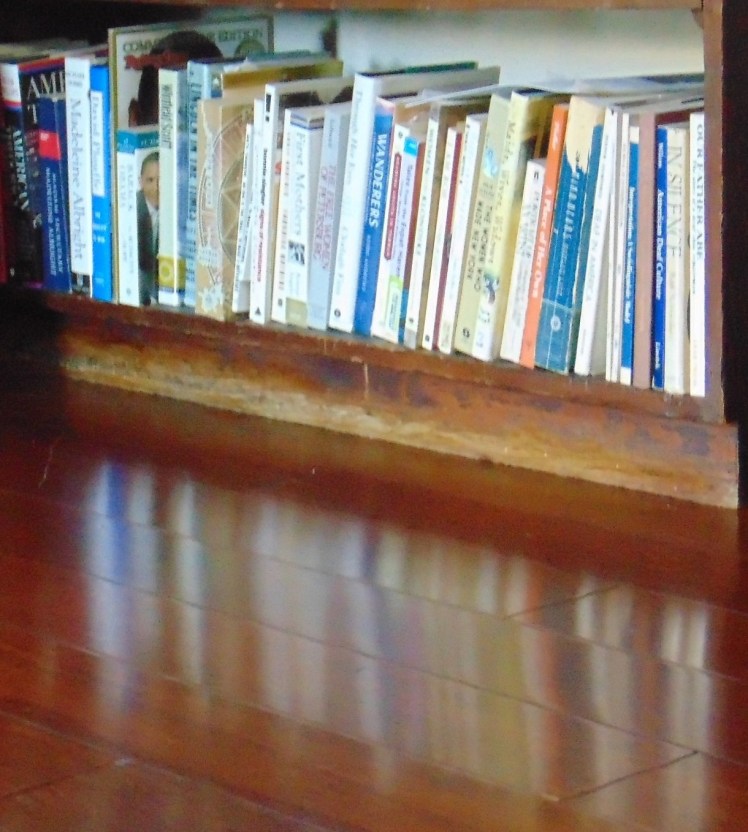
Book lovers like to “know our options” for book purchasing. This blog post profiles several options for ordering books.

Independent Book Stores

Supporting small, local businesses is important for the health of our communities. Browsing a bookstore is good for the soul and brings us into conversation with fellow book lovers.

  • My personal favorite local bookstore is Village Books in my hometown of Bellingham, Washington. Village Books creates community for local residents via their engaging, locally-loved bookstore and coffee shop. They will help book seekers “find any book that exists.” They also support local authors – they carried a couple of books that I self-published (thank you!).
  • The website “Independent Bookstores.ca” lists indie bookstores across Canada. This website is a great resource!
  • I currently live in Greater Seattle, so I would be remiss for not mentioning Seattle indie bookstore Elliott Bay Books. Because Seattle is a dog-loving city, dogs are welcome at Elliot Books. Every dog that comes in the door with a book reader gets their photo posted on Elliott Bay Book’s Instagram feed (I really should take my cat in to see if they’ll take her photo!).

National Bricks-and-Mortar Bookstores

In-person bookstores are important. Supporting brick-and-mortar stores are good for the economy. Again, browsing a bookstore is good for the soul and brings us into conversation with fellow book lovers. I buy from Barnes and Noble in the U.S.

Online and/or magazine-based book retailers (alphabetical):

  • Abe Books. Based in Victoria, B.C. – with an additional office in Munich, Germany – Abe Books has been selling discount books online since 1996. They also sell fine art and collectibles. I bought a few books from them in my earliest days online. My favorite reason for liking Abe Books is that they are Canadian!
  • Hamilton Books. Hamilton Books is based in Connecticut, USA and has been around since 1969. They specialize in selling discounted books to U.S. customers. I love Hamilton Books. They sell books via their website and a print magazine. I discovered them more than twenty years ago when they somehow got my name and mailing address; they sent me one of their magazines listing a sampling of their book inventory (I was living in B.C. and drove weekly to check my Washington State mail box where I received my U.S. mail). It was actually their magazine that I fell in love with – their listing of quirky and off-the-wall titles of available books. I started buying from them for the purpose of staying on their mailing list (this is a sentence that every marketer wants to read!). Reading their lists of “off-the-wall titles” – such as “off the beaten track” historical books and books on political and religious conspiracy theories from “every end the political and religious spectrums” – literally became Friday night entertainment for me. I actually have a stack of their magazines to give my book-loving friends. One of the books I ordered from Hamilton Books was written by a church minister who “made the case” that the Gospel of Mark was written by an astrologer (The Gospel and the Zodiac) – my curiosity wanted to know what the minister had to say…..
  • Thrift Books (their marketing angles: “gift more, spend less” and “read more, spend less”). This Washington State-based bookseller calls themself “the largest online independent used book seller” and state that they opened in 2003. A friend told me about Thrift Books last spring; I have already purchased enough books to achieve their highest reader/purchaser tier of “Literati Elite.” Their “membership tier” (“Reading Rewards”) program is simple yet fun – the more you buy, the more book-buying benefits you get….. Their membership tier program seems to be tied into our digital age approach to tapping dopamine receptors – our brains get a “dopamine high” every time we “like” or “achieve” something online via a click-of-the-mouse….. Of course, book lovers like joining “Literati Elite” status…… For every-so-many-dollars-spent, a book buyer qualifies for a free book “up to an X dollar amount” (just pay for shipping) – I’m using this member benefit to order books I want to give friends [in case you’re wondering what I’m gifting to my book-loving friends, I’m currently collecting shipping-only copies of The Gentleman from Finland (a book from a Seattle travel writer that made me laugh so hard I cried) and The Shadow of the Wind (opposite response – this novel based in 1945 Barcelona actually sent me into a dark, downward emotional tailspin but this NYTimes bestseller was so well written that I had to finish it. I am looking forward to when I’ve forgotten enough of the book to read it again)].

Encyclopedic Book Listings

Amazon-owned Goodreads provides a book equivalent to the Internet Movie Database (IMDB), listing a very broad listing of books and providing a profile of each book. A straightforward way to find – and find out about – books.

Kim Burkhardt provides writing services – including ghostwriting, “corporate storytelling,” articles, how-to manuals, and editing – at Burkhardt Writing Services. Contact us about your wordsmithing and storytelling needs.

Writer reflection: could you write this photo?

Seattle skyline at night
Seattle Skyline

Seattle has joined the ranks of high-traffic-congestion cities.

When I need to drive anywhere, I look for opportunities to go at times when traffic is likely to be less congested. Last fall, for example, I was commuting to a job that had some flexibility in terms of start times. So, I would leave home at about 6:45 am.

Leaving home at 6:45 am shares something in common with being a writer. Opportunities.

Nearly every situation has some kind of opportunity embedded within it. It’s up to us to find it.

In the case of an early morning commute – before daylight – I spotted the opportunity to take a night-time photo of the Seattle skyline – complete with the iconic Space Needle and Lake Union. People like this photo.

As writers, our writing is likewise well received when we bring appreciable observations to the written page. It is up to us to make insightful observations and find interesting ways to bring them to print.

I was able to bring viewers the photo above by moving beyond the snap-and-shoot mechanics of photography. I had learned what constitutes a good photo – identifying a visually interesting scene and learning how to frame it well with a camera’s lens. I did back flips – of sorts – to find a place to safely pull over to take this photo.

Writing – like photography – “comes to light” when we move beyond basic writing mechanics: “I saw downtown Seattle at night. You would find the scene beautiful if you saw it.” Rather, “Downtown Seattle’s skyline quite literally lights up at night. Anyone who finds themself driving southbound on I-5 at night takes in the collective beauty of hilltop business district towers and shoreline buildings left alight to ward off would-be intruders. Those who have read Katherine Kurtz’s novel St. Patrick’s Gargoyle can – when seeing downtown Seattle’s night time skyline – imagine a monthly gargoyle conclave in Seattle to protect the city equivalent to Dublin’s gargoyle conclaves. Quite striking.” (A personal aside that I would happily work in to a longer article with an opportunity for individual reflection: Dublin is located in the Emerald Isle, while Seattle is the Emerald City…. I had a memorable flight in 2018 in which I watched the sun rise in Dublin and set in Seattle….).

Being a writer is clearly more than mechanically stringing together words. Writing involves observation about the world around us, an understanding of what people want or need to think about, and an ability to bring all of that to the page in readable language. For each type of written publication, there are also genre-specific writing considerations – creativity is needed when writing novels, an ability to be factual and insightful is needed for business publications, an ability to be factually descriptive is necessary when writing how-to manuals, etc.

Kim Burkhardt provides writing services – including ghostwriting, “corporate storytelling,” articles, how-to manuals, and editing – at Burkhardt Writing Services. Contact us about your wordsmithing and storytelling needs.

Writer’s approaches to developing written content

Last week, the Textbook & Academic Authors Association published a helpful blog post directed at new (or newish) writers about dealing with a blank screen. The blog post is worth reading.

If you are a writer, what is your writing methodology?

I have several approaches to putting words to paper. Each has a time and place:

  • When I wrote my first book, Competitive Intelligence Workbook (2001), I was seeking a way to “make a name for myself” as a market research consultant. I scanned the existing literature about competitive intelligence to identify what type of book hadn’t been written. I identified that there was no book about how to organize and present competitive intelligence data. So, I wrote such a book. I thought through what types of competitor data needs to be collected by competitive intelligence (CI) professionals and created topical charts that could be populated as data is collected with the end goal of analyzing and presenting data as it is collected. The books’ purpose dictated the writing process. The book served a need; therefore, I made a profit on that book.
  • In another instance, I found a distant cousin who had been doing family genealogy for twenty years. He hadn’t organized the data he had collected into a centralized format. When relatives would ask him for family history data, he would – in each case – share information on a piece-by-piece basis. I wanted to save him time and effort of continuing to repeat this process with additional relatives, so I started organizing the data he had collected into a single repository. As I worked through this process, I saw the opportunity to take linear, timeline data and incorporate a narrative discussion into the mix. “Here’s why our ancestors were living in this location during X time period.” “This relative was able to move from job to job during the 1860’s because Ireland’s new railroad system was emerging to allow easier travel” (this was before automobiles). As I contacted other relatives, they shared family stories, old photographs, historical family letters that had been kept – all of this was added to “bring the family history to life” in a genealogy book that is now appreciated in the homes of numerous relatives.
  • Sometimes, I write creatively – inserting ideas into a document as the creative process unfolds. In these cases, I write in a rather free-style approach and then find ways to make all of the various ideas readable in a collective document.
  • When I write something short – such as an email – I think about what the recipient needs to know and how I can present the information succinctly and in a readable manner. I want to hold their attention. I focus on sharing (or requesting) information – get to the point and keep it simple. When I write an article, I consider how to write informatively and to-the-point using a style that is engaging, and authoritative.

I always think about the reader when I write. What does the reader likely to already know about a topic? What does the reader need to know (that’s what I need to write!)? What writing format and style is going to hold the reader’s attention? A facts-and-figures document is going to be written very differently than a novel or a humorous anecdote for a news story. Always: “Is what I’m writing readable? Why and how? How can I improve this document?” Making text readable is the responsibility of the writer – it’s not the job of the reader to figure out what the writer meant!

Kim Burkhardt provides writing services – including ghostwriting, “corporate storytelling,” articles, how-to manuals, and editing – at Burkhardt Writing Services. Contact us about your wordsmithing and storytelling needs.

In the news: growing need for “corporate storytellers”

In our world’s changing media, social media, and overall communications landscape, companies are seeking effective ways to communicate meaningfully with their customers and communities. More and more, companies are hiring “corporate storytellers” – those of us who present companies via “the written word” on all the mediums that are part of “corporate branding.”

Check out the Wall Street Journal’s December 12, 2025 article on the growing need for “corporate storytellers” (by the way, WSJ came up with a great “corporate campfire” image for the story!).

Kim Burkhardt provides writing services – including “corporate storytelling” – at Burkhardt Writing Services. Contact us about your wordsmithing and storytelling needs.

Author reflection: writing ancestor’s biographies

Harriet Susannah Ellis was born on February 5, 1863 in Riverstown, County Sligo, Ireland.

Her oldest surviving son – my Irish-born great-grandfather – lived until I was thirteen. I have fond memories of him – including the time when he fell asleep at my birthday party (I was turning eight) and the party stopped so that the children in attendance could watch him snore with an Irish brogue. When I was three or four, he carried me around his yard in a wheelbarrow – great fun for a young child. I still buy deep purple pansies because he had deep purple pansies in his yard when I was a child.

When I was growing up, we heard stories about my great-grandfather’s childhood in rural Ireland (County Wicklow). We heard about his blind father (I, in turn, was raised by my blind mother). We heard about his paternal uncles and paternal grandfather who were doctors (in 2018, I visited Trinity College Dublin where they did their medical degrees in the 1800’s. It gave me chills to realize they had walked the same hallways when I walked through the campus’s historical library).

Yet, I realized in 2013 that I knew nothing about my great-grandfather’s mother. Surely she had existed, confirmed by the fact that she had children whose lives I knew about. I had never heard any mention of her. I didn’t even know her name.

Because we live today in a digital age, I was able to go online in search of information about my great-grandfather’s mother. Within a fairly short time, online genealogical research led me to her name. Harriet Ellis. Specifically, Harriet Susannah Ellis. Beyond that, I didn’t find much. In January, 2014, I decided to do a Google search of her name. Fortunately, I found a post on a genealogy website written by her youngest brother’s grandson. Great! I contacted him.

When I contacted Harriet’s youngest brother’s grandson, it turned out that he lives in a Dublin suburb. Much to my happy surprise, he had been driving around Ireland for twenty years looking up genealogical records of our ancestors (I am fortunate – not every budding genealogist finds such a relative!). He was happy to share the information he had been meticulously collecting.

Fast forward. I began organizing data about my Irish ancestors into book form. I contacted other descendants – collected their info about recent generations. I collected old family photographs, old family letters that had been saved, family stories that had been passed down. All of this became our family’s genealogy book (see my previous post about my Irish genealogy book).

By the time we printed our genealogy book and had the first family reunion since 1980, I had learned much about Harriet’s life. She was born in the same Irish county as William Butler Yeats’ family at about the same time (did she ever cross paths with him?); the county where she was born was also where Bram Stoker’s mother was born (Bram Stoker seems to have gotten several ideas for his Dracula novel from stories his mother told about County Sligo’s cholera epidemic in the 1930’s). Harriet had thirteen children, ten of whom lived. She filled out the birth certificate and the death certificate for her first-born child who died two hours after an unattended home birth. Her father was a school master who moved from job to job, taking his wife and children all over Ireland via Ireland’s newly-emerging train system. She eloped. As the daughter and sibling of school masters, she valued education for her children. She emigrated in the 1900’s. She died the same day that the Soviets invaded Poland. I suggested to my Dublin-area distant cousin that we continue on, writing Harriet’s biography. We did.

Writing Harriet’s biography was made possible as a result of many years of genealogical research. A point I want to stress is that books are often the end-result of much learning and effort. The book was also a labor of love. Writing a book is an effort that requires learning the mechanics of writing (we learn at least some if this in school), learning what’s involved in making information presentable and interesting, and putting in the time to write. Having an editor go through one’s written material helps identify needed improvements before publishing a book (identifying spelling and grammar that need correction, spotting incomplete presentations of information that are overlooked when knee-deep in the writing process, noting shifts in perspective or narrative style that need correction, etc.).

I am also pleased to have contributed to bringing stories of every day historical women’s lives to print. After we published Harriet’s biography, I came up a research network that studies “Perceptions of pregnancy.” I wrote an article for their website about Harriet’s experience of childbearing: An Experience of Home Births in Rural Ireland: 1883 – 1903.

I hope you will take an interest in Harriet’s biography.

Kim Burkhardt provides writing services at Burkhardt Writing Services. Contact us about your wordsmithing needs.

Writer’s Challenge: Describe this photo

cat looking at fish
Cat, fish tank

A skilled writer will be able to conjure up the fullness of the image and all the connotations that come to mind (make a few sentences worth a thousand words….)

.

.

Scroll down…..

.

.

Writing tip:

  • Mentally identify what it is that makes this photo eye-catching.   When we look at a photo that captures our attention, it grabs our attention without us necessarily articulating an explanation of why the photo interests us – a good writer articulates these matters to create a mental response equivalent to our visual response to a photo.

.

.

Scroll down…..

.

.

Sample written description of this photo:

  • In the next moment, rather than seeing the face of one brown-eared, brown-legged, brown-tailed long-haired cat, we see the back of its’ white head as the seal-point Himalayan stares intensely at goldfish swimming furiously – likely in stark fear – in their ten gallon fish tank not much taller (or longer) than the very-focused feline…..

Kim Burkhardt provides writing services at Burkhardt Writing Services. Contact us about your wordsmithing needs.

Writer’s Skill: Incorporating perspective

Mountains, clouds
Mountains with low-lying clouds

I currently live just over one hundred miles from where I grew up.

When I drive from south of Seattle to my hometown of Bellingham, Washington, my favorite part of the scenic drive is the commonly-occurring mountain-level clouds in Skagit and Whatcom Counties.

I recognize now that locals in Whatcom and Skagit counties likely take these clouds for granted.  I did while I was growing up.

Now that I live a two hour drive away (when traffic’s not bad!), I live just far enough away to not have these low-lying clouds be a daily (or near-daily) occurrence.  Thus, I now notice them as a locally distinct event when I go home.  They are visually engaging.

A good writer does the same thing when writing – noticing and/or developing perspective – and then using descriptive narrative – to incorporate that perspective into the written word.

When written text lacks perspective, the reader will notice the text only in observing that what they are reading is not worth reading.  They may not know that perspective is what’s missing, but they won’t want to continue reading.  It is incumbent upon the writer to identify perspective and incorporate it into the text.

Providing perspective – among a host of skills involved in understanding the world and one’s audience – is necessary for the writer who wants an audience.

Kim Burkhardt provides writing services at Burkhardt Writing Services. Contact us about your wordsmithing needs.